


“The way we see things is affected by what we know or what we believe.”
—John Berger, Ways of Seeing
Every image or work of art is inherently shaped by perspective, and our ways of seeing, born from an interplay of personal experiences, cultural influences, and social contexts, profoundly affect how we interpret the world. As art critic John Berger observed, our appreciation of an image is inseparable from our own way of seeing (10), reminding us that perception is always a dialogue between the artwork and the viewer. Though Berger’s writing focused primarily on visual art and photography, his words are true nonetheless of literature.1 He emphasized that seeing precedes words: a child recognizes before it can speak, and an adult perceives before interpreting. In literature, this translates to the raw encounter with text before critical analysis. Reading is not merely decoding words; it is engaging with scenes, emotions, and events in a visual or imaginative sense. Just as a viewer perceives a painting before an art historian overlays meaning, a reader experiences narrative, imagery, or dialogue before literary theory imposes categories like genre, symbol, or theme. Literary texts, like visual images, contain layers of perception from literal events and emotional tones to implied meanings.
Drawing on Bernard Stiegler’s ideas on technics and memory, writer and researcher Leonid Bilmes argues that writing is, first and foremost, a technology that, like other artistic forms, can be employed to influence perception and create “textual ‘site[s]’ where the retrospect of memory meets the prospect of temporal becoming” (1085). In other words, textual forms shape and mediate perception over time. Regardless of the art form under investigation, the narratives we construct about it emerge from our initial perception, shaped by memory and experience, while also being informed by historical analysis and the anticipation of future interpretation. This framework is particularly useful when approaching works like Ben Lerner’s short story, The Polish Rider, published by the New Yorker in 2015, where the interplay between visual art, narrative, and memory is made explicit. Lerner’s story, with its focus on a lost painting and the labyrinthine search surrounding it, exemplifies how narrative perception can mirror the act of viewing a work of art: layered, mediated, and continually reframed by memory and expectation. In this sense, the story not only illustrates Berger’s insight about the multiplicity of meanings inherent in any image, but also embodies Bilmes’s conception of narrative as a technology that shapes temporal and perceptual experience.
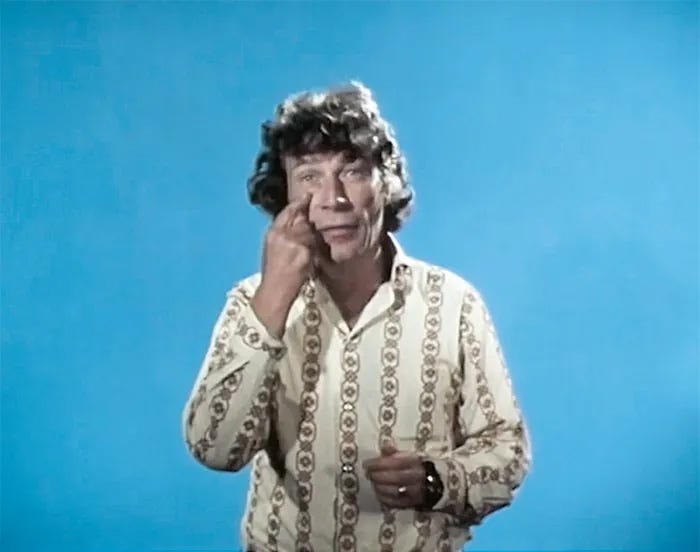
We view memory through the lens of personal perspective, constantly revisiting our experiences to situate them within a present reality that continuously unfolds into the future. Our experiences, both individual and collective, are shaped not only by a network of factors such as time, location, sociology, politics, philosophy, and art (what Giorgio Agamben calls the “apparatus”),2 but also, especially in the 21st century, by the global mediation of events.3 According to Bilmes, this mediation occurs when “so many millions come to view the same event” (1082). Such shared exposure generates what he terms “programmed expectations, which, once mediated, may become memories” (1082). The increased regularity of these expectations, Bilmes warns, may produce “the threat of [a] ‘standardisation’ of consciousness” (1082). This standardization functions as another node in the apparatus, influencing not only how we perceive, interpret, and recall experience, but also how the narratives we construct about the past align with collective memory.
Extending this concern with mediated experience into the temporal dimension, Bilmes examines how new media reshape our sense of time itself. In his essay on Ben Lerner’s 10:04, he argues that contemporary media practices produce a temporal shift “whereby the future tense is becoming” (1082), creating a present that is increasingly projected toward the future. This shift, combined with the growth of “memory’s reliance on technology” (1081), often leaves us absent in the immediate now so that we may exist in an anticipated later. Yet narrative offers a different temporal framework: although “in narrative the future is not open” (1089) and is shaped by the writer’s hand (1087), Lerner’s use of prolepsis allows the narrator, a fictionalized Ben, to revisit past expectations and, in doing so, “conjure a sense of future openness” (1091). Through this interplay of memory, expectation, and narrative form, Bilmes demonstrates the “continual shaping force of narrative form over memory” (1088), showing how stories both frame our understanding of the past and project imaginative possibilities into the future.
“Narrative,” Bilmes argues, “always operates alongside memory” (1083). The two move hand-in-hand from past to present-future, for “memory is never simply re-collected, but recounted via its narrativization” (Bilmes 1083). Just as Berger suggests that the meaning of an image changes, “or more exactly, its meaning multiplies and fragments into many meanings” (Berger 19) depending on the environment in which it is situated and the eye of the beholder on which it converges, so too does Bilmes argue that “the past retains its capacity for future reinvention” (Bilmes 1083) through subsequent narrative reshaping. This idea that memory, and more specifically art, is predicated on the narratives that we construct about them, is situated at the focal point of The Polish Rider.
The Polish Rider like much of Lerner’s work, exists within that thinly veiled space between reality and fiction, marking itself as an example of the post-modern genre literary critics have come to refer to as autofiction.4 The story is dictated by a nameless narrator (yet another stand-in for Lerner himself) and is, in a way, presented as a preamble to a proposed essay, or rather as material from which this proposed essay will be culled from. The base material is the story of a missing diptych left in an Uber the night before the artists’ opening exhibit. As the artist, known as Sonia, and the narrator attempt to track down the painting, they traverse a “Kafkaesque chain of politely ineffectual customer reps” (Lerner 5) at Uber who refuse to divulge any personal information about the passenger who rode in Sonia’s Uber immediately after her—a passenger who, ostensibly, took her painting.
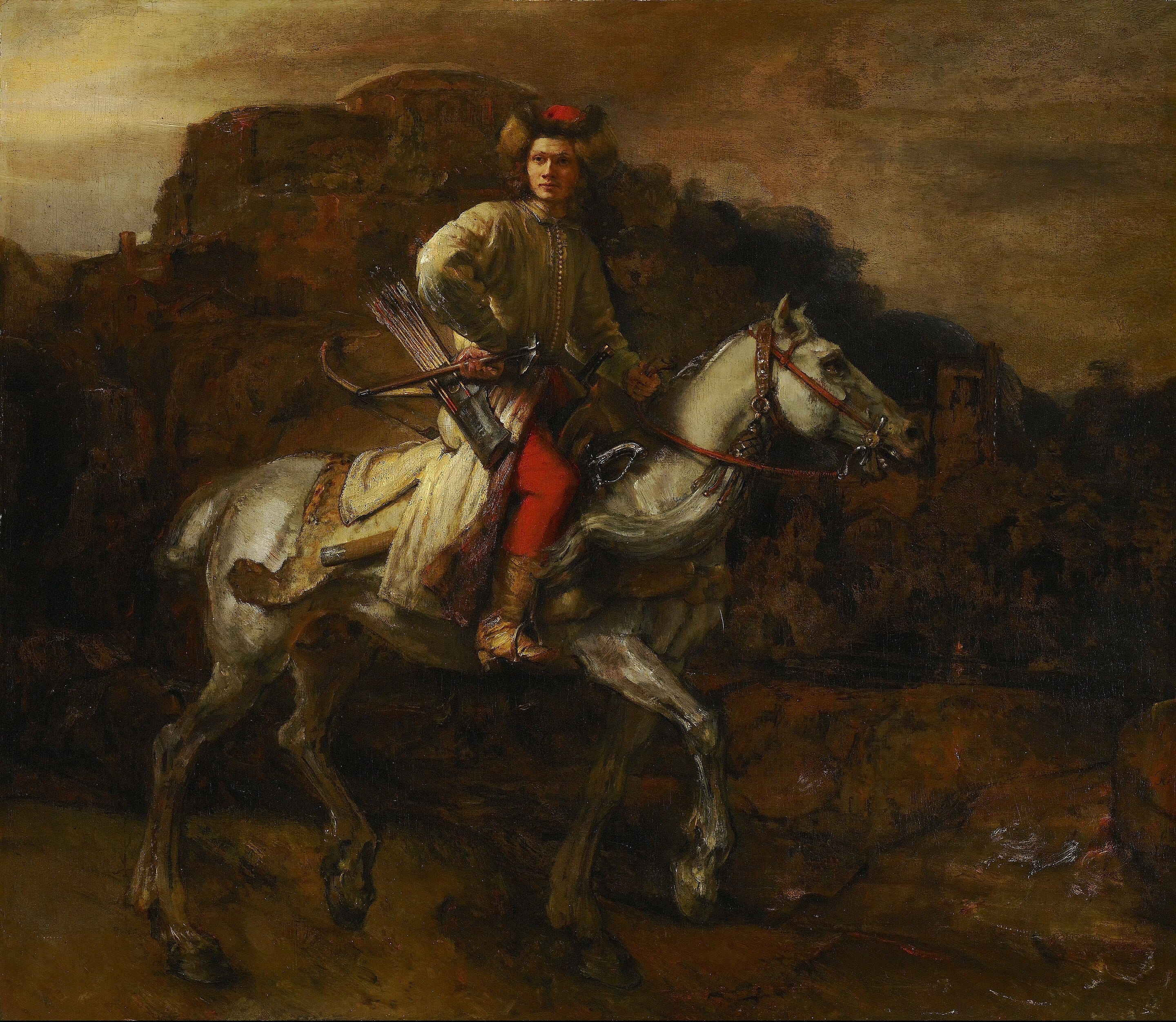
On the surface, The Polish Rider presents itself as a whodunit, loosely engaging with elements of detective fiction to create space for meandering discourse. These passages serve as genre cues reminiscent of the private-eye soliloquies in film noir, exploring the value of art and the framing power of narrative. Yet a closer reading reveals Lerner’s intricate technique: by blending the short story and the essay while simultaneously engaging with ekphrasis, he constructs layers rich in allusion, depth, and complexity. In this regard, his approach evokes Eliot, in which every citation resonates within a broader historical and sociopolitical context. Even the title, The Polish Rider, exemplifies this layering. It references Rembrandt’s 1655 painting of a man on horseback against a shadowy, mysterious landscape, while also nodding to a prior New Yorker article, published in the same magazine as Lerner’s story, that examines debates over the painting’s authenticity.5 This interplay of explicit dialogue with other works of art extends across multiple mediums, reinforcing the story’s intricate web of cultural and artistic references.
Take, for instance, Lerner’s novel 10:04. The title, rich with double meaning, references both the film Back to the Future and to Christian Marclay’s video art installation, “The Clock.”6 This mise en abyme-esque referencing is indicative of much of Lerner’s work, and serves as one mode of repetition that works to thread his writing together. “Patterning is more about receptivity than it is about administration,” states Lerner in a 2019 interview for The Yale Review. It is the ability to “perceive the possibility of pattern-making in what might at first appear to be pure contingency” (Barnett). Conversely, critic Jacqueline O’Dell argues in her essay “One More Time with Feeling,” that Lerner’s use of patterning and repetition, what he calls “modes of recycling,” acts in opposition to his efforts to “show how the impulse to understand literature as a universal balm against neoliberal atomization” through the use of narrative form is, “in fact, one of neoliberalism’s most serious ills” (448). O’Dell stakes her claim against Lerner’s application of patterning in 10:04 on the basis that this use of repetition and analogy displays how experiences with “literary and neoliberal forms . . . are highly contingent on the reader’s position in relation to them” (444). Here she argues that Lerner’s inability to reach sincerity is a symptom of his inability to break free from the very neoliberal, economic structures he “seeks to disavow” (447). Though I agree with O’Dell and find it difficult to imagine any literary attempt to critique neoliberalism without acknowledging its influence and ingrained authority over the literary structures that allow for the production of said critique, I disagree, however, that the contingency of a reader’s position functions as an undesirable outcome of artistic experience and interaction with art.7
The notion that literary and artistic experience is predicated on the contingency of the reader or observer is evaluated thoroughly in “The Polish Rider,” when the narrator considers “the different resonances” (Lerner 3) that the images depicted in all of Sonia’s paintings, variations on the photograph taken of the “iconic socialist fraternal kiss” (Lerner 2) between Erich Honecker and Leonid Brezhnev, have on each of them “and the degree to which [their] respective senses of art history and politics are marked by her having been raised behind the Iron Curtain, and [him] having been raised in the American heartland” (Lerner 3).8 The narrator lingers here to unpack the pliability of experience and all subsequent effects on perception as he fixates on the replicated kiss depicted in Sonia’s artwork. It is obvious to him that the image of the kiss means something different to him than it does to Sonia, not only from a sociopolitical perspective but from an artistic perspective as well. For as he says, while Sonia grew up an artist behind the Berlin Wall, he grew up a writer amidst the specter of the Cold War in the Midwest. Their trajectories are similar, yet different, and therefore yield two separate mindsets, two singular approaches to patterning and association.
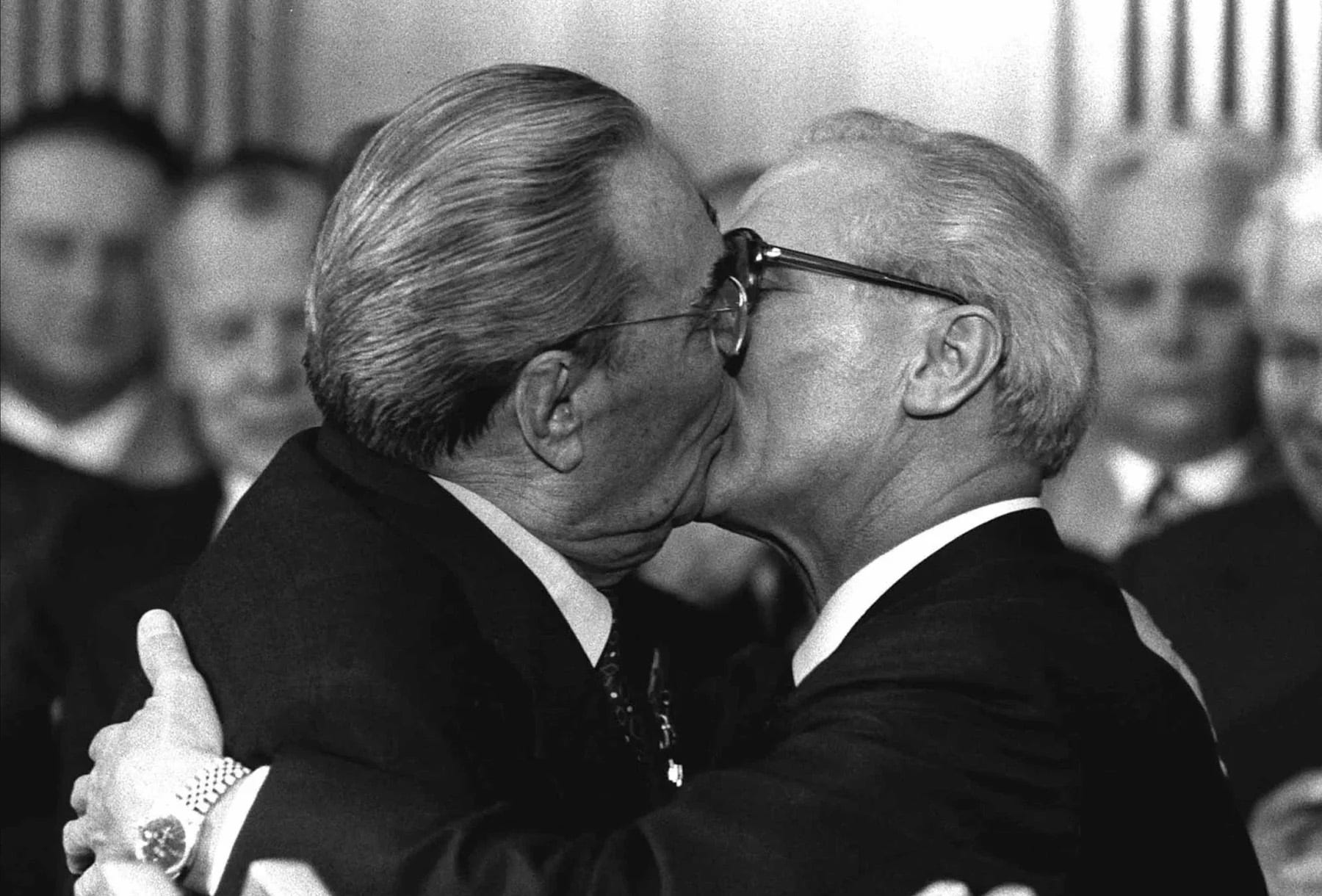
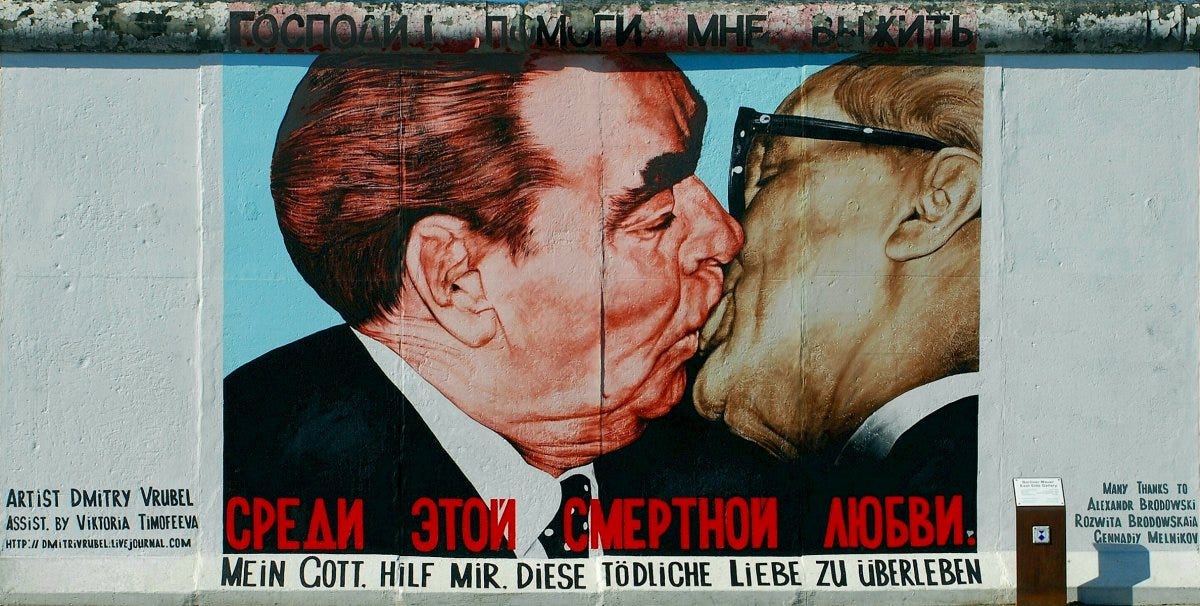
It is in this musing on history and perception that the narrator enters into conversation with Berger, as he questions the authenticity of Sonia’s reproductions with a series of hypotheticals about which version of the kiss Sonia’s paintings are actually depicting: “Did a particular painting of Sonia’s depict the actual kiss? The photograph of the kiss? The painting of the photograph of the kiss? Or was she painting the repainting of the painting of the photograph of the kiss?” (Lerner 2). This recursive questioning resonates with Berger’s argument in Ways of Seeing that imaginative engagement allows one to share the artist’s perception: just as viewers of a painting access social, psychological, and emotional dimensions beyond the literal subject, readers of literature inhabit characters’ consciousnesses and experience the “drama of existence” embedded in a text. Though the narrator abruptly abandons this line of inquiry, opting instead to redirect attention to the meticulous composition of Sonia’s work in order to show how the “patient execution of her canvasses” (Lerner 3) defies the instantaneous, disposable nature of digital technologies, his contemplation remains grounded in Berger’s framework. Both seeing and reading are reciprocal acts: the observer, or reader, co-constructs meaning through attention, empathy, and imaginative projection, so that the layers of mediation in Sonia’s paintings, like Lerner’s narrative itself, reveal as much about the perceiver as the perceived.
After traveling from Uber’s Manhattan office to the police and back to Sonia’s apartment, the narrator and Sonia remain no closer to locating the missing painting. It is only when Sonia’s Uber driver, Kashif, finally relents and provides the address of the rider he believes may have taken it that they gain a tangible lead. Upon entering the apartment building he directs them to, the narrator notices a copy of Late Art, a collection of essays to which he contributed, lying on a table in the entryway. While Sonia expresses no interest in the synchronicity of the moment, fully focused on recovering her painting, the narrator drifts into an internal reflection. He considers how this copy of Late Art is but one of many, mechanically and digitally reproducible like a photograph, capable of being “abstracted from any particular material locus” (Lerner 8).9 In this awareness, he begins to perceive the narrative potential of framing a story around an object displaced from its original context: this particular copy of Late Art is elevated, made singular by the narrative circumstances surrounding it, its value inseparable from the story being constructed.
Through the use of genre-bending, allusion, and patterning in The Polish Rider, Lerner builds a narrative architecture that mirrors the fluidity of memory and the contingency of perception. If Berger reoriented the way we “see” art, and Bilmes mapped how narrative structures temporal experience, Lerner enacts these theories in motion, dramatizing how the meaning of art is never fixed but continuously renegotiated through attention, mediation, and storytelling. His self-referential layering not only resists the “standardisation of consciousness” Bilmes warns against but also demonstrates how narrative can reclaim singularity within an era of mass reproduction. In this way, The Polish Rider functions not merely as a meditation on loss or recovery but as an experiment in preserving the openness of the future within the frame of the past, a reminder that the stories we tell now actively shape what we will remember.
References
Agamben, Giorgio. What Is an Apparatus? and Other Essays. Translated by David Kishik and Stefan Pedatella, edited by Werner Hamacher, Stanford University Press, 2009.
Barnett, Catherine. “Ben Lerner: On Writing, Boundary Blurring, and Magic Pills.” The Yale Review, vol. 107, 2019, https://doi.org/10.1111/yrev.13565. Accessed 14 Apr. 2021.
Benjamin, Walter. “The Work of Art in the Age of Mechanical Reproduction.” Illuminations, translated by Harry Zohn, edited by Hannah Arendt, Schocken Books, 1969.
Berger, John. Ways of Seeing. London: BBC and Penguin Books, 1977.
Berger, John, and Michael Dibb. Ways of Seeing. BBC Enterprises, 1972.
Bilmes, Leonid. “‘An Actual Present Alive with Multiple Futures’: Narrative, Memory and Time in Ben Lerner’s 10:04.” Textual Practice, vol. 34, no. 7, 2018, https://doi.org/10.1080/0950236X.2018.1515789. Accessed 14 Apr. 2021.
Eastham, Ben. “The Polish Rider, by Anna Ostoya and Ben Lerner.” ArtReview, 3 Mar. 2019, artreview.com/jan-feb-2019-book-the-polish-rider-lerner-ostoya/.
Gibbons, Alison. “Metamodernism, the Anthropocene, and the Resurgence of Historicity: Ben Lerner’s 10:04 and ‘The Utopian Glimmer of Fiction.’” Critique: Studies in Contemporary Fiction, vol. 62, no. 2, 2020, https://doi.org/10.1080/00111619.2020.1784828. Accessed 14 Apr. 2021.
Lerner, Ben. “Late Art.” The Paris Review, 2018, https://www.theparisreview.org/blog/2018/09/13/late-art/. Accessed 7 Apr. 2021.
---. “The Polish Rider.” The New Yorker, May 2016, www.newyorker.com/magazine/2016/06/06/the-polish-rider-by-ben-lerner. Accessed 7 Apr. 2021.
Manshel, Alexander. “The Rise of the Recent Historical Novel.” Post45, 2017, https://post45.org/2017/09/the-rise-of-the-recent-historical-novel/. Accessed 7 Apr. 2021.
O’Dell, Jacqueline. “One More Time with Feeling: Repetition, Contingency, and Sincerity in Ben Lerner’s 10:04.” Critique: Studies in Contemporary Fiction, vol. 60, no. 4, 2019, https://doi.org/10.1080/00111619.2019.1596875. Accessed 14 Apr. 2021.
Notes
John Berger’s statement, “The way we see things is affected by what we know or what we believe,” appears both in his 1972 BBC television series Ways of Seeing and in the subsequent book of the same name. While the phrasing and emphasis differ slightly between the two, the central thesis remains consistent: perception is inseparable from knowledge, belief, and context. Though Berger’s work primarily examines visual art and photography, his insight extends to broader cultural critique, providing a useful framework for analyzing literature and other narrative forms.
Giorgio Agamben defines an apparatus (dispositivo) as "literally anything that has in some way the capacity to capture, orient, determine, intercept, model, control or secure the gestures, behaviors, opinions, or discourses of living beings" (What Is an Apparatus?, 14). This concept extends beyond traditional institutions to encompass technologies, practices, and systems such as writing, media, and language that mediate and shape human experience. Here, I refer to the apparatus as it includes both personal and collective mechanisms that influence how we perceive, interpret, and recollect events, thereby affecting the narratives we construct about the past.
By “global mediation of events,” Bilmes refers to the way contemporary media allow vast numbers of people to experience the same moment simultaneously, shaping collective memory and expectations. A concrete example can be found in Lerner’s The Topeka School, in which children across America watch the Challenger shuttle disaster unfold live on television. Events like this, akin to the live broadcast of the moon landing or coverage of 9/11, demonstrate how mass media create shared temporal experiences, generating “programmed expectations” that may later solidify into collective memories.
Autofiction is a literary genre that blends autobiography with fiction, allowing authors to explore personal experience while reshaping it creatively. The term was coined by French writer Serge Doubrovsky in 1977, and notable contemporary authors include Marguerite Duras, Karl Ove Knausgård, Ben Lerner, and Rachel Cusk, who use autofiction to blur the boundaries between lived reality and narrative invention.
Rembrandt’s The Polish Rider (c. 1655) is notable both for its enigmatic subject, a lone horseman in exotic dress, and for ongoing debates over its authorship. While traditionally attributed to Rembrandt, some scholars suggest that parts or all of the painting may have been executed by one of his students, highlighting the collaborative practices of his workshop. The painting’s mysterious provenance and layered interpretations mirror Lerner’s literary strategy of embedding intertextual references and multiple layers of meaning.
The Clock is an art installation by Christian Marclay featuring a 24-hour video montage composed of thousands of film and television clips depicting clocks and other references to time. Each clip is synchronized to the actual time, creating a functioning timepiece that unfolds in real time. The installation premiered at White Cube Gallery in London in 2010 and has since been exhibited worldwide, including at the Museum of Modern Art (MoMA) in New York (December 2012–January 2013), Tate Modern in London (September 2018–January 2019), and the Neue Nationalgalerie in Berlin (November 2025–January 2026). The installation's real-time synchronization and its exploration of temporality resonate with Lerner’s thematic interests in time and narrative structure.
By “neoliberalism” O’Dell refers not only to the economic policies of deregulation, privatization, and market-oriented governance, but also to a broader cultural logic that prioritizes individualism, commodification, and efficiency. In the context of literary form, this logic shapes both the production and reception of texts, influencing how writers deploy narrative strategies, patterns, and modes of repetition, as well as how readers interpret and internalize these forms. Lerner’s “modes of recycling,” then, can be read as both a formal experimentation and a site where literature negotiates, reflects, or inadvertently reproduces the structures of neoliberal cultural and economic authority.
The “iconic socialist fraternal kiss” refers to a famous photograph taken in 1979 capturing East German leader Erich Honecker and Soviet leader Leonid Brezhnev embracing and kissing on the lips during the 30th anniversary celebration of the German Democratic Republic. The image became widely circulated, reproduced, and parodied, coming to symbolize both the ideological solidarity and the performative rituals of socialist leadership.
Late Art is a collection of essays by Lerner in which he examines artistic practice through the lenses of decline, temporality, and mortality. The book’s appearance in the narrative emphasizes Lerner’s ongoing interest in how art’s meaning is shaped by historical and material contexts, highlighting the narrative significance of an object displaced from its original setting.