


In The Handmaid’s Tale, Margaret Atwood constructs a dystopian future that feels disturbingly familiar, not because of its speculative government or setting, but because of its deep intertextual resonance with real-world histories of religious control, war, and gender-based oppression. Building on the idea of intertextuality, defined by James E. Porter as “looking for ‘traces,’ the bits and pieces of Text which writers or speakers borrow and sew together to create new discourse” (Porter 34), Atwood’s novel relies on allusion to invoke the memory of prior regimes, theological traditions, and historical injustices.1 Through these intertextual echoes, The Handmaid’s Tale becomes more than a fictional warning, it’s a rhetorical patchwork of rebranded repression that functions as a vibrant, contemporary entry within the discourse community of dystopian literature. “A discourse community shares assumptions about what objects are appropriate for examination and discussion,” (Porter 39). Common tropes found within the discourse community of dystopian literature include portrayals of totalitarian governments, constant surveillance, controlled language, propaganda, loss of individuality, fear-based social control, environmental collapse, rebellion or resistance, technological domination, and rigid social stratification.2 While these tropes serve to situate a text within a specific genre, writers often focus the dial of their narrative by utilizing allusion to create deeper meaning. Atwood enters this community by not only reinforcing these expectations, such as environmental collapse and reproductive control, but also disrupting them through her focus on gender, theology, and the domestic sphere, areas often minimized in classic dystopias like 1984 or Brave New World.

Three notable allusions in The Handmaid’s Tale highlight how language and history can be weaponized to erase identity and reinforce authoritarian control. The Rachel and Leah Center (also known as the Red Center), the litigious suppression of women’s names, and widespread adoption of biblical oratory function as commentary and critique on the sociopolitical plights of human history. “The thing to remember is,” explains Atwood, “that there is nothing new about the society depicted in The Handmaid’s Tale except the time and place. All of the things I have written about have—as noted in the ‘Historical Notes’ at the end—been done before, more than once” (Jadwin 21). This dense layering of historical allusion not only situates The Handmaid’s Tale firmly within the dystopian genre but also primes readers to recognize its commentary as both timeless and timely, setting the stage for a closer examination of how Atwood reanimates past oppressions through specific textual references.
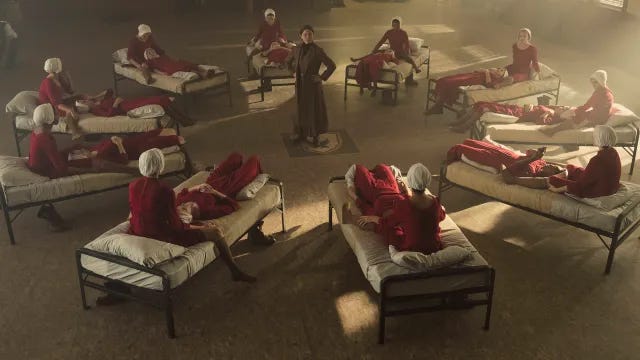
The most striking of her textual references comes in the biblical allusion of the Rachel and Leah Center, which is Gilead’s main training ground for Handmaids. The “Red Center,” as it has become colloquially known among the Handmaids, is a thinly veiled reeducation camp. Named after the biblical story of two sisters who marry Jacob and compete for his affection through childbearing and the surrogacy of their maids (Genesis 30), the Rachel and Leah Center is a powerful symbol of religious distortion. What appears on the surface as a place of spiritual instruction is, in fact, an indoctrination system designed to erase women’s pasts and suppress their autonomy, individuality, and sexuality. As the narrator, Offred, recounts the center’s methods, we see a disturbing echo of real-world institutions like conversion therapy and “pray the gay away” camps.3 During the “Testifying” scene, Aunt Helena forces Janine to confess that her own rape was her fault. “Who led them on?” she asks, and the women chant back, “She did. She did. She did” (Atwood 72). The purpose of this ritual is not only to shame the women into submission, but to rewire language and belief in order to make victims complicit in their own dehumanization. The use of scripture here is not for comfort or enlightenment but for domination. As Aunt Lydia chillingly justifies, “There is more than one kind of freedom . . . freedom to and freedom from” (Atwood 24). By framing submission as safety, the Aunts aim to convince the women that they should be thankful for how protected and glorified they are in this new society. Tapping into the well-known story of Rachel and Leah, Atwood reflects on patriarchal norms, the reception of polygamy, and the societal value placed on fertility. This allusion to Genesis becomes a rhetorical device to expose how religious texts can be repurposed into tools of control when filtered through power-hungry ideologies.
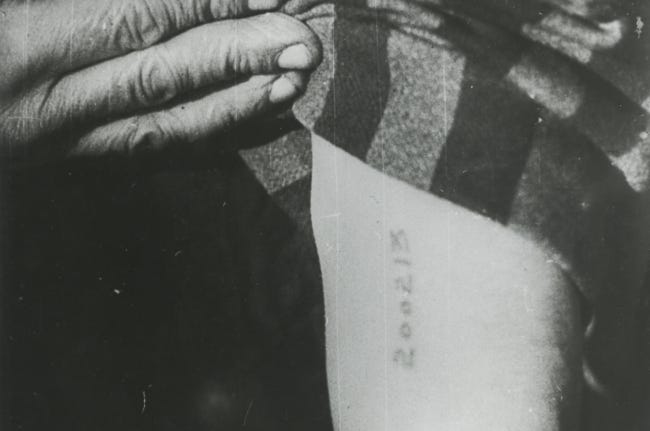
A second allusion lies in Gilead’s suppression of women’s names, which mirrors historical atrocities such as the dehumanization of Jewish people during the Holocaust. Offred reflects, “I have another name, which nobody uses now because it is forbidden. I tell myself it doesn't matter, your name is like your telephone number, useful only to others” (Atwood 84). Here, Atwood references not just the erasure of identity under fascist regimes, but also the broader intertextual history of naming and renaming as political acts. The regime strips individuals of their given names, symbols of their pasts, relationships, and uniqueness, and replaces them with patronymics like “Ofglen” or “Ofwarren,” binding women to their male “owners.” This linguistic restructuring erases subjectivity and reduces women to reproductive functions, not unlike the numerical tattoos inflicted on prisoners in the Nazi concentration camp of Auschwitz.4 “Tattooing camp numbers in Auschwitz started in autumn 1941 . . . [when] camp authorities decided to use it to identify Soviet prisoners of war," and beginning in the spring of 1942, “authorities at the camp ordered tattooing the number on the left forearm . . . needles fixed on a wooden shaft and soaked in ink began to be used for puncturing the skin to form digits” (Auschwitz-Birkenau State Museum). This practice also echoes how enslaved African Americans were stripped of their birth names and assigned the surnames of their owners upon being sold, often recorded on ledgers that later disappeared or were destroyed, leaving their real names lost to history (Berry 39). A similar system operated in the Magdalene Laundries of Ireland, where “fallen” women were often renamed, institutionalized, and forced into labor under religious justification. These practices reflect Atwood’s concern with how bureaucratic and theological systems collaborate in the erasure of personhood. As Lisa Jadwin notes in her article discussing the cultural and historical context of The Handmaid’s Tale, “Atwood began compiling a file of newspaper clippings documenting the rise of fundamentalist theocracies around the world, including those theocratic movements in the United States that sought to dissolve the traditional boundary between church and state” (Jadwin 25). Atwood utilizes this form of collage-like intertextuality to recall real systems of surveillance and suppression that operated under the guise of order and national purity from the racism of the Third Reich to the religious fanaticism of Iran and Afghanistan.
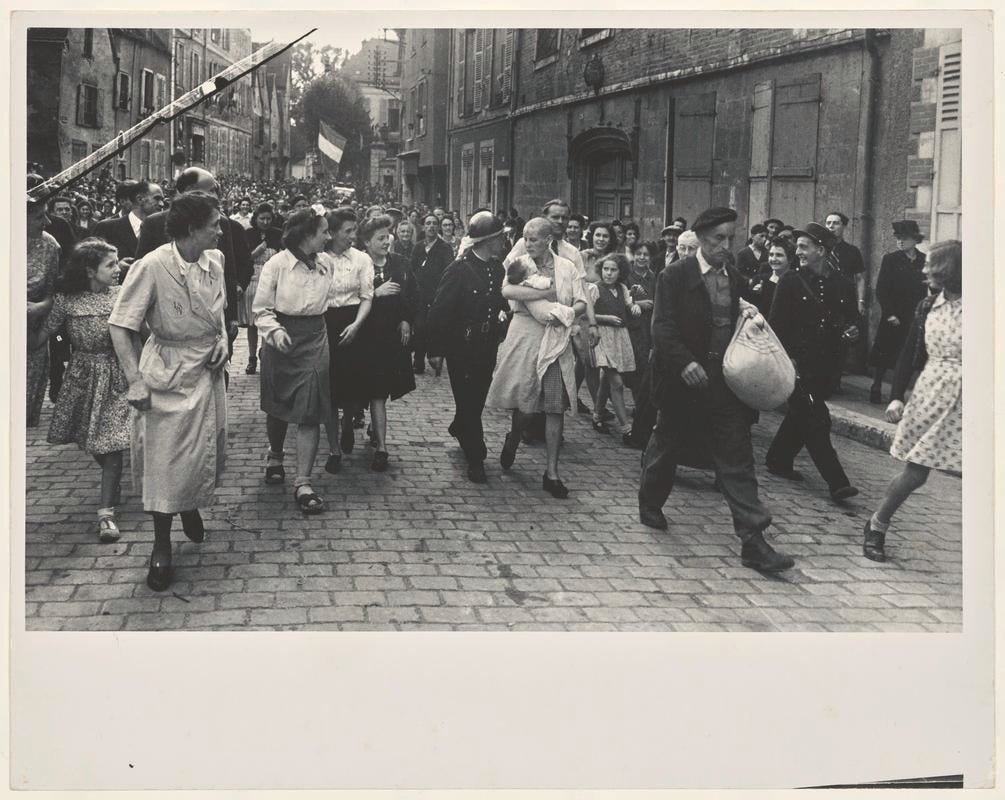
Finally, Atwood’s use of scriptural and sermon-like language, particularly in public punishment scenes and expected everyday communication, reveals the terrifying power of oratory in totalitarian systems. Foucault argued that discourse “does more than designate things,” it “systematically forms the objects of which it speaks” (Foucault 49), and in Gilead, language is not simply descriptive but constitutive.5 When Offred observes the public hangings, the oratory structure mimics religious ritual: the cadence, the crowd response, the performative morality. These moments recall many historical displays of punitive justice such as the head-shaving of women accused of collaboration in post-WWII France,6 the surveillance networks in North Korea, or the public shaming embedded in China’s Social Credit system. These are acts meant to suppress dissent by making dissenters into warnings and examples for the public. As Offred observes, “Fear is a powerful stimulant” (Atwood 268), and the regime uses that fear to repress not just resistance but memory itself. Ironically though, the rituals meant to silence also preserve the memory of defiance like a kind of rhetorical haunting that makes the past impossible to fully suppress. The regime of Gilead fully understands this, as Aunt Lydia acknowledges that Ofglen is part of a “transitional generation” (Atwood 117). “It is hardest for you,” she says, “for the ones who come after you it will be easier. They will accept their duties with willing hearts” (Atwood 117). Offred’s resistance is often invisible and internal, her act of remembering her daughter, Luke, her real name becomes itself a form of rebellion, much like Winston’s journal in Orwell’s 1984. “But who can remember pain, once it’s over? All that remains of it is a shadow, not in the mind even, in the flesh” (Atwood 114). She resists through memory. She resists by surviving. The Aunts urge the Handmaidens to accept and adopt the slogan, “From each according to her ability; to each according to his needs,” which they cite “from the Bible, or so they said, St. Paul again, in Acts” (Atwood 117). The irony of course is that the language is a repurposed Marxist maxim plucked from its original context and turned on its head to serve the needs of the regime.7 “The pen between my fingers is sensuous, alive almost, I can feel its power, the power of the words it contains” (Atwood 186). This rhetorical manipulation is a crucial element in maintaining control to ensure that even the very language of oppression becomes a tool for the regime’s propagation.
Atwood’s deployment of allusion doesn’t just anchor The Handmaid’s Tale within the lineage of dystopian literature, but rather it reveals how regimes are rarely invented from scratch. They are patched together from inherited dogmas, familiar fears, and language made dangerous through repetition. “We were the people who were not in the papers. We lived in the blank white spaces at the edges of print” (Atwood 57). The intertextual “traces” Porter describes are drawn from scripture, propaganda, judicial decrees, and resistance literature to form the architecture of Gilead’s power. Atwood’s effective use of intertextuality creates echoes that force us to confront how histories of oppression are recycled into new rhetorics of control, and in that sense, the novel isn’t merely a projection of what might be, but a reconfiguration of what already was. It’s Atwood’s warning to us, the reader, to pay attention to what we have failed to notice being repurposed over and over again by those in power. The Handmaid’s Tale asks us not to fear fiction, but to turn on the light RIGHT NOW and read reality more closely.
References
Atwood, Margaret. The Handmaid’s Tale. Anchor Books, 1998.
Auschwitz-Birkenau State Museum. "Stamps for Tattooing Prisoners Discovered." Auschwitz-Birkenau, www.auschwitz.org/en/museum/news/stamps-for-tattooing-prisoners-discovered,1057.html. Accessed 19 May 2025.
Berry, Daina Ramey. The Price for Their Pound of Flesh: The Value of the Enslaved, from Womb to Grave, in the Building of a Nation. Beacon Press, 2017.
Foucault, Michel. The Archaeology of Knowledge and the Discourse on Language. Translated by A.M. Sheridan Smith, Pantheon Books, 1972.
Jadwin, Lisa. “Margaret Atwood’s The Handmaid’s Tale (1985): Cultural and Historical Context.” The Handmaid’s Tale: Critical Insights, edited by J. Brooks Bouson, Salem Press, 2010, pp. 21–41.
Kristeva, Julia. Desire in Language: A Semiotic Approach to Literature and Art. Columbia University Press, 1980.
Levi, Primo. Survival in Auschwitz. Collier Books, 1996.
Porter, James E. “Intertextuality and the Discourse Community.” Rhetoric Review, vol. 5, no. 1, 1986, pp. 34–47. JSTOR, http://www.jstor.org/stable/466015.
Sotheby's. "Margaret Atwood | The Unburnable Book." The Unburnable Book, 2022, https://www.sothebys.com/en/buy/auction/2022/the-unburnable-book/margaret-atwood-the-unburnable-book.
Notes
James E. Porter draws on poststructuralist theories of text, particularly the intertextual theories of Julia Kristeva, to argue that all writing is inherently intertextual composed of “traces” from prior texts, voices, and cultural discourses. In his influential work, Intertextuality and the Discourse Community, Porter challenges traditional notions of authorship and originality, suggesting that what we often perceive as "original" writing is actually the result of a complex process of recombination and recontextualization of existing textual materials. Kristeva’s concept of intertextuality, which emphasizes that meaning is produced not in isolation but through the interaction between texts, underpins Porter's argument. He contends that every act of writing is situated within a larger discourse community and is shaped by its conventions, expectations, and language, and that originality should not be seen as the creation of something entirely new, but rather as the innovative rearrangement and reinterpretation of pre-existing discourse.
For additional reading, see Parade’s list of the “40 Best Dystopian Novels of All Time.”
Programs such as Exodus International promoted the belief that same-sex attraction could be "cured" through religious intervention. These programs were widely discredited and condemned by major psychological associations for causing psychological harm. Some of these organizations have since apologized for these practices, and Netflix recently released a documentary series, Pray Away, investigating the harm these organizations caused.
The dehumanizing practice of tattooing identification numbers onto Jewish prisoners at Auschwitz erased names and individual identities, reducing people to data for bureaucratic efficiency and control. According to the Jewish Virtual Library, “the tattoos are also a testament to the resilience of those who bear them. Yet despite the importance of the tattoos, as testament, symbol, and historical artifact, little scholarship has been devoted to the subject . . . there exist virtually no official period documents relating to the practice; what we know stems from anecdotal evidence contained in camp records and the accounts of those who were at the camps.”
Foucault’s theory of discourse claims that language is not a neutral medium for conveying facts but a powerful tool that shapes and produces knowledge, truth, and social reality. In works such as The Archaeology of Knowledge and Discipline and Punish, Foucault argues that discourse governs what can be said, who can speak, and the conditions under which statements are considered valid. Rather than simply reflecting the world, language operates as a system of power that defines what is visible, intelligible, and socially acceptable. This framework is essential to understanding Atwood’s treatment of language in novel, where linguistic control is a primary mechanism for maintaining theocratic rule. By regulating how individuals speak, write, and even think, the regime constructs a reality in which its authority appears natural and unassailable. Atwood draws heavily on Foucauldian ideas to illustrate how discourse can be weaponized to enforce ideology and suppress resistance.
The Shaved Woman of Chartres was taken by Robert Capa on August 16, 1944 in Chartres, France. The photograph captures a French woman being paraded through the streets while clutching her child after her head was forcibly shaved as punishment for a relationship with a German soldier during the Nazi occupation. It was first published in Life magazine, the photo has become an enduring symbol of the épuration sauvage (wild purge), a period marked by public retribution against alleged collaborators, also known as Collaboration Horizontale, following France's liberation.
Marx’s phrase “From each according to his ability, to each according to his needs” originates in his Critique of the Gotha Program (1875), not the Bible. Atwood’s use of this misattribution underscores how regimes rebrand ideology as theology to legitimize authority. This blurring of secular and sacred authority reveals how easily truth can be distorted to serve authoritarian ends.